
Red Light Therapy Science
How Evidenced-Based Light Spectrum Architectures Support Cellular Energy, Skin Radiance, and Physical Wellness
What is Red Light Therapy & Photobiomodulation Science?
At the core of red light therapy science is photobiomodulation (PBM), a non-thermal, non-invasive light technology in which specific wavelengths of red and near-infrared (NIR) light interact with tissue cells to optimize routine biological processes and support baseline cellular function.
This photon-driven interaction profile demonstrates how targeted light bands influence energy pathways. When red or near-infrared light waves interact with the surface and sub-layers of the skin, they are absorbed by chromophores within the mitochondria. A primary mechanism involves supporting cytochrome c oxidase, an enzyme that plays an essential role in normal cellular energy dynamics and ATP production.
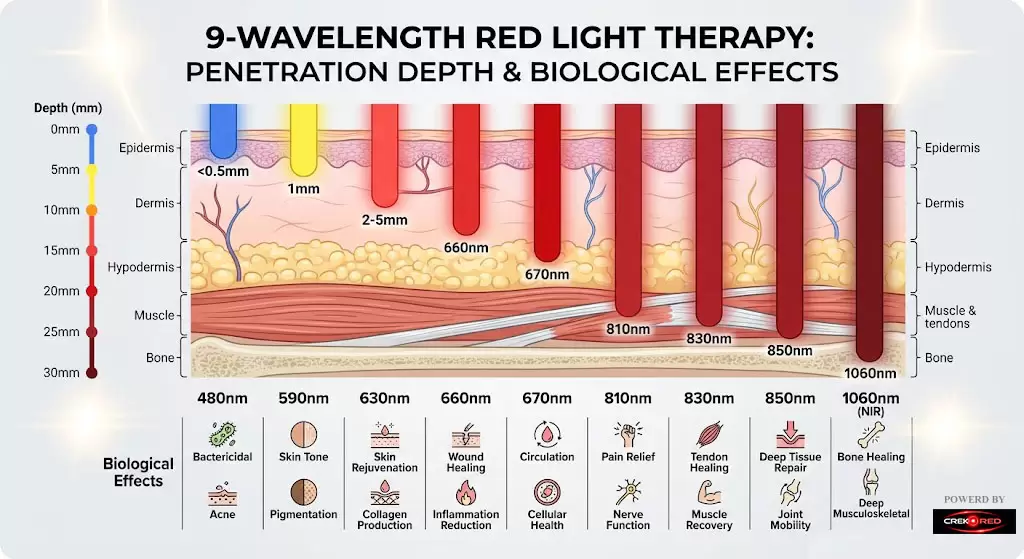
*Figure 1: Comparison of delivery depths across the 9-wavelength light spectrum.
Photonic Wavelengths & Light Spectrum Distribution Matrix
| Target Layer | Wavelength | Primary Optimization Profile |
|---|---|---|
| Skin Surface | 480nm / 590nm | Blue & Yellow light bands for surface clarity support, skin tone refinement, and refreshing the skin appearance. |
| Epidermis | 630nm / 660nm | Standard red spectrum for supporting natural collagen vitality and promoting routine cellular energy (ATP). |
| Dermis | 670nm | Optimized red light engineered for non-thermal deep tissue rejuvenation and recovery support. |
| Muscle Matrix | 810nm / 830nm | NIR light bands designed for post-workout recovery enrichment and localized physical relaxation. |
| Deep Tissue Zones | 850nm / 1060nm | Deep NIR wavelengths engineered to optimize overall joint comfort, physical wellness, and maximum energy delivery. |
Technical Insight: According to established red light therapy science literature, this categorized wavelength spectrum ensures precise optical energy is delivered safely to the target zones, from the epidermal surface down to deep physical structures.
Why High Irradiance & Energy Power Density Matter
Irradiance measures the actual power density delivered by the light source. Within technical optical reference frameworks, sufficient High Irradiance is vital; without a high-density output, light photons cannot fully reach intended depths to encourage a cellular energy response. Our hardware profiles deliver reliable, concentrated output to ensure optimal non-thermal energy absorption during short, efficient sessions.
Low-Level Light Therapy: Proven Documented General Wellness Benefits
Photobiomodulation (PBM), commonly utilized in premium athletic and personal care settings, is widely documented for its positive effects on daily energy production, skin health maintenance, and physical performance optimization. When used consistently, specific bands of light energy support several key areas of systemic wellness:
1. Mitochondrial Optimization & Cellular Energy Production
The foundational framework of PBM involves encouraging standard mitochondrial efficiency. By helping cellular receptors capture light energy, the process supports the natural baseline production of ATP (adenosine triphosphate) — the main power source for overall cellular performance.
Potential general outcomes include:
- Optimized cellular efficiency,
- Support for healthy metabolic parameters,
- And enhanced general vitality across tissue systems.
This energetic foundation provides the baseline support required for daily body maintenance and physical performance.
2. Local Oxidative Stress Mitigation & Post-Exertion Relief
Light energy parameters help maintain full systemic balance rather than interrupting natural pathways. Observation data suggests that consistent exposure can:
- Help ease local oxidative stress in tissues,
- Promote natural systemic equilibrium,
- And enhance localized circulation and blood flow.
This helps support overall joint flexibility, standard muscle comfort, and smooth systemic recovery following intense training or daily stressors.
3. Athletic Conditioning & Muscle Recovery Acceleration
PBM configurations are a major staple within advanced athletic training and physical performance routines. Light application protocols assist users to:
- Minimize everyday muscle fatigue from workouts,
- Alleviate temporary post-exercise soreness and stiffness,
- And support natural body repair mechanisms after physical strain.
Regular use helps optimize athletic endurance, muscle strength parameters, and everyday performance pacing by ensuring consistent structural recovery cycles.
4. Dermal Rejuvenation & Natural Collagen Support
Visible red light bands are widely favored in personal care and aesthetic applications because they interact safely with delicate facial areas without causing thermal damage.
- Supports the natural systems responsible for collagen and elastin vitality,
- Refines skin texture and smooths the appearance of fine superficial lines,
- And balances overall skin tone, luminosity, and elastic texture.
Because PBM is fully non-invasive, it serves as an excellent everyday option for promoting a radiant, refreshed, and youthful look.
5. Blood Flow Optimization & Microvascular Circulation
Exposure to specific wavelengths helps promote smooth microcirculation dynamics, allowing cells and underlying tissues to receive:
- Consistent delivery of essential daily nutrients and oxygen,
- Efficient localized systems for natural cellular waste management,
- And enhanced general cell turnover and health maintenance.
Healthy microvascular circulation is a key factor in keeping tissues resilient, responsive, and energized.
6. Targeted Physical Comfort & Mobility Support
Light parameters are frequently utilized to maintain physical comfort in areas prone to routine wear-and-tear, such as the back, neck, and major joints.
- Eases temporary tightness and localized strain,
- Maintains healthy joint flexibility and motion,
- And encourages target zones to return to comfort through non-invasive energy delivery.
Rather than providing a temporary block, the technology works by supporting the body’s own natural recovery architectures.
7. Fibroblast Activity & Structural Tissue Resilience
Targeted light configurations offer excellent secondary support for the body’s everyday renewal processes, helping maintain target areas in peak condition.
- Supports regular structural integrity during ongoing tissue repair,
- Encourages natural fibroblast function,
- And maintains smooth cellular vitality during structural renewal stages.
8. Nighttime Recovery & Circadian Rhythm Pacing
Contemporary sleep science indicates that exposure to narrow-band red light in the evening supports natural daily biological pacing. Unlike harsh blue screens, red wavelengths:
- Minimize artificial light disruption to the body's natural sleep preparation,
- Encourage regular evening relaxation and transition routines,
- And support morning alertness by optimizing night-time rest quality.
This offers an easy, non-chemical pathway toward better daily energy balance and wellness.
9. Mental Clarity & Cognitive Performance Research
Because near-infrared light features an excellent transmission profile through outer physical barriers, it remains an active focus in modern wellness research exploring:
- Support for healthy localized circulation pathways,
- Methods for enhancing general daily focus and cognitive pacing,
- And optimal strategies for reducing general mental fatigue and stagnation.
This engineering field continues to expand as users seek clean alternatives for daily productivity optimization.